
How should I organize this article?
I’ll just go ahead and tell you the punchline: my novels and stories for the last 10-15 years are set in what could be called “The City of Man.”
Let me explain.
World-building is so much fun. It’s part of the reason I love writing stories. Like J.R.R. Tolkien, I love building worlds. I created a world of sorts in my most recent blog post, “Now, Allie, NOW!”
 One of the major elements a fiction writer must consider, right up there with plot, genre, and characters, is SETTING. Deciding on a setting can be one of the most fun parts of creating a story; it is for me anyway.
Some writers use a “here and now” time and place with their stories. Day-in-the-life kinda stuff. They don’t get cutsey with fancy places or circumstances. Maybe they want their characters and narrative to be as authentic, real, and relatable as possible.
Maybe their artistic journey has brought them to the place of writing Literary Fiction, fiction that eschews literary flamboyancies of any kind, such as genre tropes that get points merely for the thrill of, say, space aliens or rapturous romance in Venice, or the hard-boiled detective.
Or outlandish settings. Writers may restrict themselves to real-world settings and a present-day timeframe so that the conflicts of the human heart may be the focus, not the scenery. This is admirable. Unfortunately, they can often be a hard sell. Their reach will be more limited. And, for my money, such an approach bypasses an aspect that can make the reading more thrilling to the imagination.
Ah well. We need such writers and their stories, understated though they may be.
Of course, it doesn’t have to be one or the other. Stories with a clear genre or an imaginary setting can explore the human heart just as well.
Now, look. I have an MFA degree. I was taught to rein in my adolescent instincts and discipline myself to write literary fiction. It took a lot of effort to bring this wild stallion to heel, but by the end, I did it. I’m very proud of some of those later stories I wrote for the program.
But I’ve decided that setting my stories in an imaginary world of The City of Man is very fruitful soil for the kind of stories I want to tell.
So what do I mean by The City of Man?
Saint Augustine
Saint Augustine was the 4th- and 5th-century Bishop of Hippo, a city on the coast of the modern country of Algeria, in northern Africa, not far from Carthage. He was one of the most influential theologians in all of Christian history.
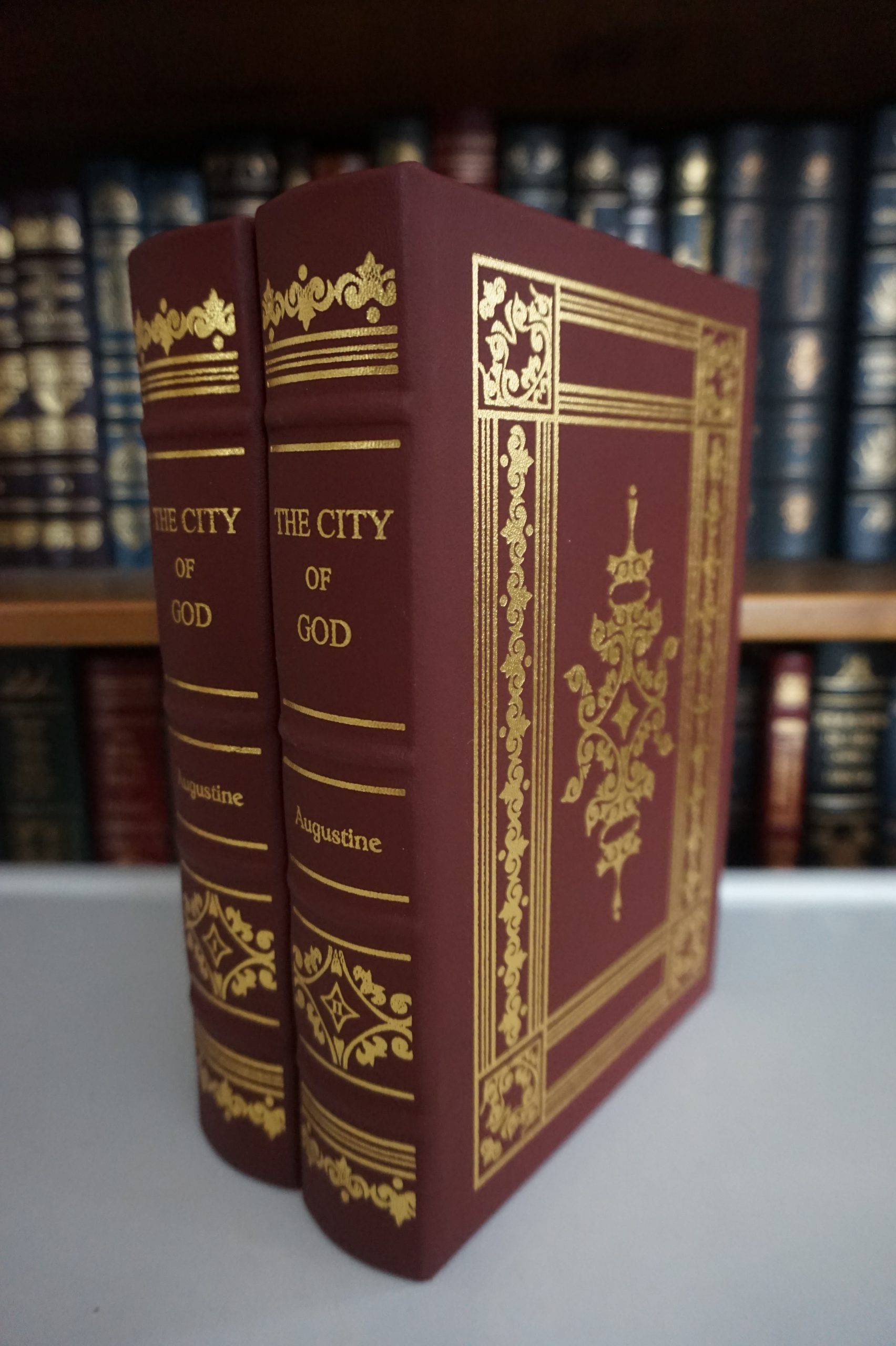 Augustine wrote a very long book called The City of God. I happen to love this book. It’s nearly a thousand pages, and I listened to it on audiobook while jogging. When I was finished, I went back to the beginning and listened to it again. The scope of topics it covers is infinitely broad. I want to read it again.
Like a good bishop, Augustine wants to draw his readers to contemplate, as the title proclaims, the City of God—that is, the eternal city, perhaps the Kingdom of God, the place of the redeemed in the future. Or simply, heaven.
It’s a nice unifying metaphor for a theologian and philosopher and apologist for the early church. But if there is a City of God, then obviously there is a City of Man. So what is the City of Man?
It is the “here and now” I mentioned above. The human world. The only world we know. But there’s more.
All stories are about what goes on in the messy cosmos that we live in. But the spicy sauce is that it exists under the brooding and watchful eye of the City of God.
Not only do our stories happen here, but the schemes, activities, and characters of the City of God also unfold here in the City of Man. The humans do not see them; we only see the messy world. But humans may see their effects. Sometimes odd things happen, fingerprints of an alternate reality showing up on our world.
Humans in my stories may experience catastrophic suffering and hardship, and may cry out to the silent heavens for relief or justice. Just like in our experience, the heavens are silent. We wonder if there is anyone up there listening. We wipe our tears away and go on with life in ignorance and darkness. No bolt of lightning appears, no voice from the clouds. No answers are given. That’s what it’s like to live in the City of Man.
But I don’t leave it like that forever. Meaningful things happen. Significant acquaintances are made. The plot moves forward. But sometimes the reader gets a glimpse of bigger reality.
The City of Man is a place of darkness, chaos, and no easy answers. There is no positive portrayal of religion or church, no faithful pastors or churchmen. And definitely no Christians. Christian characters usually ruin stories in my experience.
Good people die. I may end a story with some relief of narrative tension or some reason for hope, but no happy endings.
It’s a melancholy place. But it is a place where the City of Man is not the only City.
This has already provided me a rich field in which to tell stories.
The Former Hero
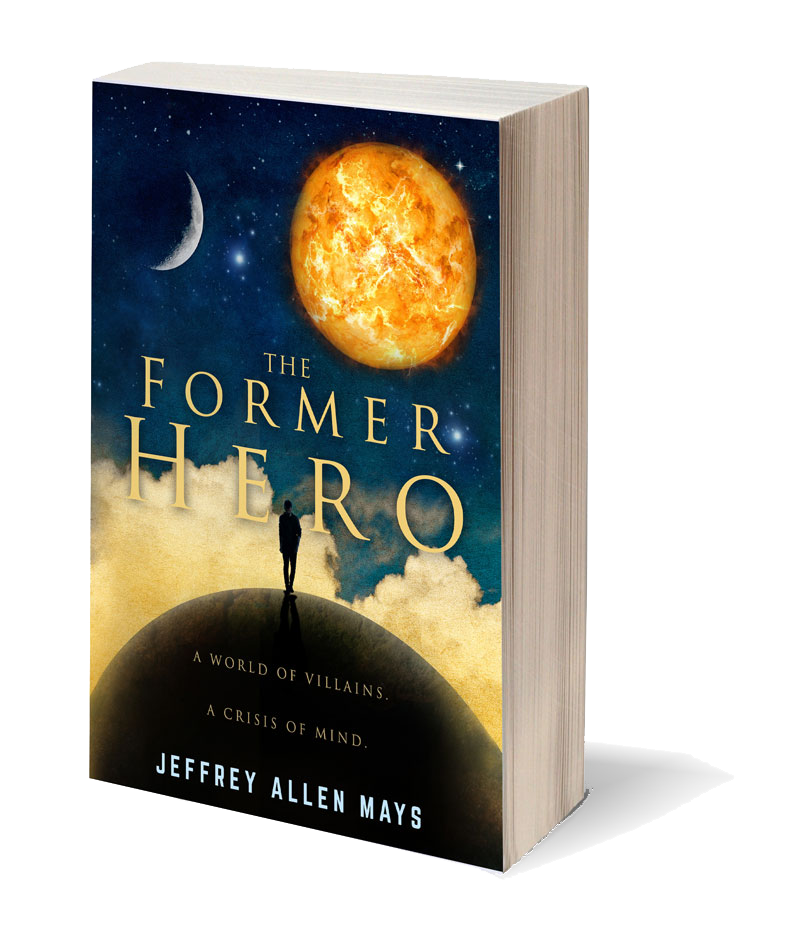 In my first novel, The Former Hero, the main narrator, Lieutenant McCarthy, is a jaded detective in an unnamed city. He makes a couple of ruminating references to the city, wryly calling it “the city of man.” The book takes place in a grubby, corrupt city with corrupt politicians and abuse and addiction and exploitation.
But there is a mysterious evil presence that haunts the city, and in a parallel narrative, the history of the city is told in a Garden of Eden/Fall of Humanity remix.
I never mention God or Jesus or heaven or religion. If you were paying attention, near the end, the title character who was formerly a real superhero finally reveals his “secret identity,” his real name—Adam Deburg. Man of the city.
 Blue Gospel
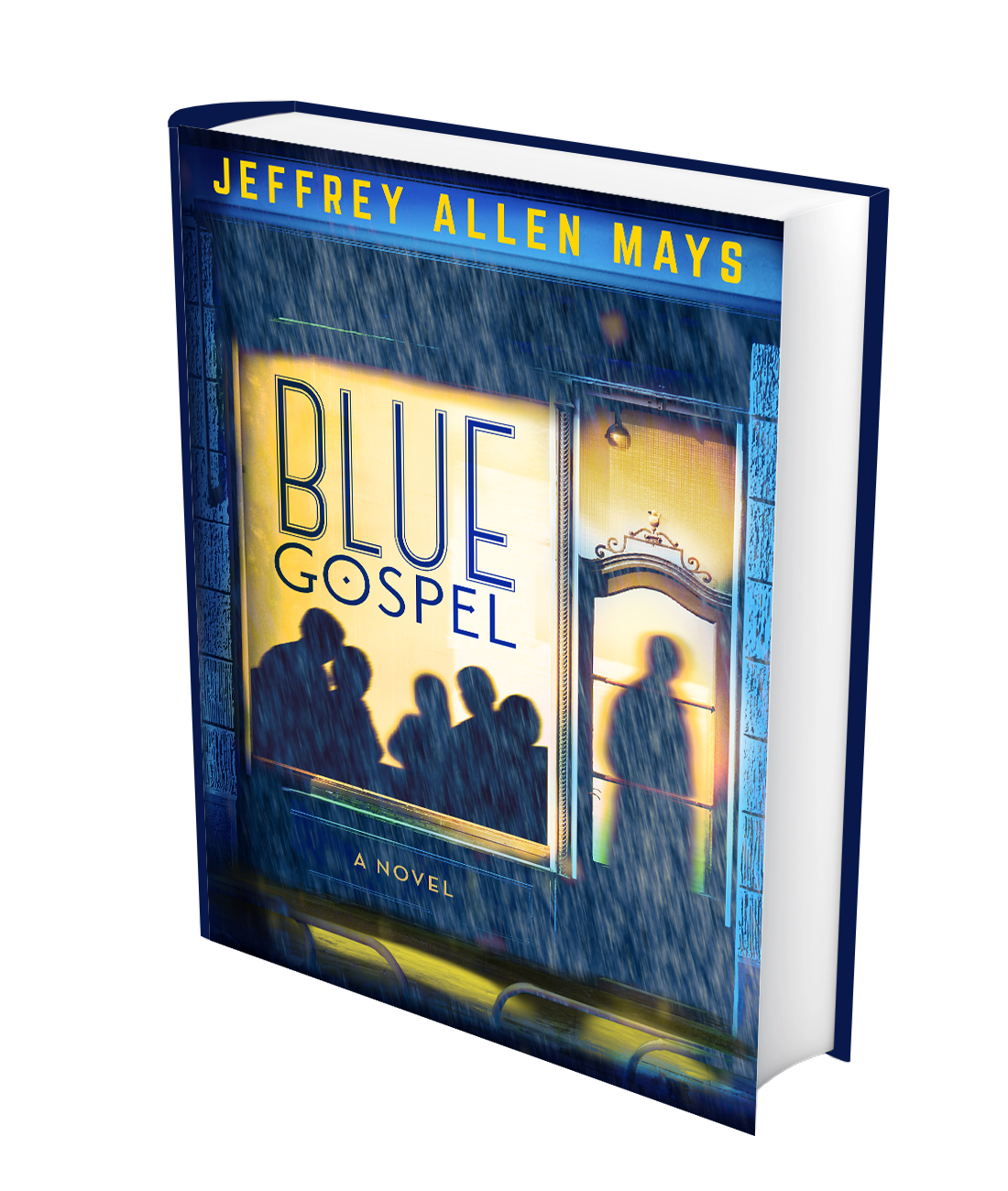
In my forthcoming novel, Blue Gospel, I decided to make it a little more obvious. This makes sense because it’s a 20th-century retelling of the Biblical gospel story. How could the unseen realm help but be more on display?
The main setting seems a lot like New York. In the Bible, it is Jerusalem. But I have renamed it “Anthropolis,” from the Greek for City of Man. This time, eternity is occasionally breaking in. Some people catch glimpses of angels. The Mystic, Jesse Schreiner, who is the carpenter’s son, is himself an inbreaking of the transcendent into the City of Man.
So more City of God elements are to be expected. But I still take pleasure in keeping it very subtle and mostly out of sight, not answering all the questions. We are all wanderers here. Stuff goes on that we can’t explain. Life is hard. Pain and heartbreak are all around us, just as they were in the time of the original gospels. And not everyone, including even the Lord’s disciples, gets their questions answered, nor are they spared pain and suffering.
So there you go. I’ve tipped my authorial hand a little bit. I hope it whets your appetite to read the book when it becomes available later this summer.




I enjoyed The Former Hero, and am looking forward to Blue Gospel!